
Blog posts tagged "kubernetes"

Last May, KubeCon gathered multiple tech enthusiasts, students, professionals, and companies. The event highlighted various topics and insights on how to collaborate on pushing the boundaries of cloud-native computing. One of our Engineering Directors, Mykola Marzhan, shared his knowledge about databases on Kubernetes at KubeCon, during a
Managing a Kubernetes cluster is a complex endeavor. As demands on a cluster grow, increasing the number of deployed pods can help ease the load on the system. But what do you do when you run out of nodes to host those pods, or when the load decreases and some nodes are no longer needed?
Capsule helps reduce the operational effort to operate and maintain secure multi-tenancy on Charmed Kubernetes. Users, teams, and departments can now share the same infrastructure without compromising security and usability.

Heads up! The OpenInfra Summit Berlin is coming!!! After the difficult pandemic times, the OpenInfra Summit is finally back. This year the event will take place in Berlin, Germany in June, 7-9. As usual, Canonical will be there to share the latest news about Linux, OpenStack, Kubernetes and Infrastructure (LOKI). Canonical at the OpenInfr

Find out who the panelists are for the Industry Panel discussion during Operator Day on May 16th. During this virtual session industry thought leaders will discuss the latest trends and developments about Kubernetes and Operators. Our panelists are not only thought leaders in various areas of cloud-native technologies, but also work at le

We consistently follow the upstream release cadence to provide our users and customers with the latest improvements and fixes, together with security maintenance and enterprise support for Kubernetes on Ubuntu. This blog is a quick overview of the latest development highlights that are made available in Canonical Kubernetes 1.24 as well
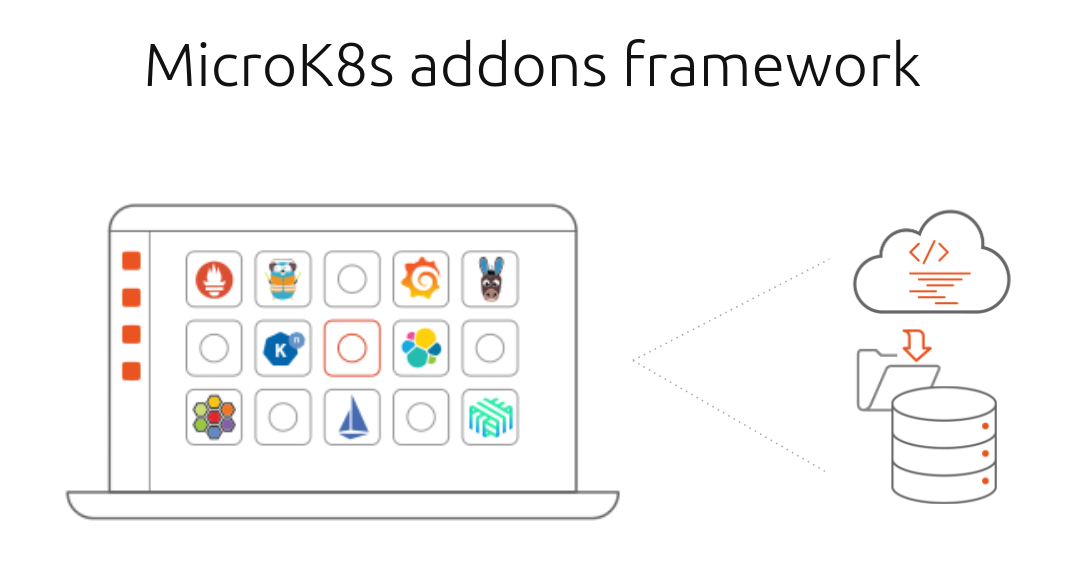
This is a guest post, originally posted on Konstantinos Tsakalozos’ personal blog, adapted and reproduced here with his permission. Konstantinos is a Staff Engineer at Canonical and the Software Lead behind MicroK8s. MicroK8s addons, extra services which can be added to your bare-bones cluster, are a great favourite with users as they all

The latest Kubernetes release, 1.24, is about to be made generally available. Today, the community announced the availability of the 1.24 release candidate. Developers, DevOps and other cloud and open source enthusiasts who want to experiment with the latest cutting edge K8s features can already do so easily with MicroK8s. MicroK8s is a C

This is a guest post, originally posted on Angelos Kolaitis‘ personal blog, reproduced here with his permission. Angelos is a MicroK8s software engineer at Canonical. How we brought a universal, cluster-wide storage solution to MicroK8s. Why is storage in Kubernetes hard? Kubernetes is well-known as an open-source system for automating de

Containerisation has transformed the enterprise IT landscape, driving faster, more secure, and more predictable software delivery than ever before. Thanks to technologies like Docker, building containerised applications is easy, and many businesses are working with hundreds or even thousands of containers. To effectively deploy and manage

Developers want Kubernetes infrastructure that is fast, consistent, and without limits! Platform engineering, IT, and DevOps teams are adopting Kubernetes as a Service (KaaS) now more than ever before to streamline efficiency for dev teams and operations. But what happens when the requirement involves deploying clusters directly on top of

Bare metal Kubernetes is a powerful set of technologies that builds on the best ideas behind the public and private cloud, yet abstracts away some toilsome aspects related to virtualisation management and networking. For operators and users, it provides significant benefits, making it easier and faster to ship and maintain complex, distri

To serve today’s on-demand customer, financial institutions must become agile digital enterprises focused on delivering innovative products, services, and customer experiences. Adopting a container-first approach represents an unrivalled opportunity for financial institutions to increase system efficiency and resource utilisation, improv

The global health crisis has accelerated the digital transformation within the financial services industry. A McKinsey report highlights that “In a competitive environment of rising cost pressures, where rapid action and response is imperative, financial institutions must modernise their technology function to support expanded digitisatio

The previous blog post talked about the composability of applications. The key element for composing applications is defining the relations between application elements. And supporting relations is one of the advantages of the Charmed Operator Framework – including its runtime, the Charmed Operator Lifecycle Manager. The shipping containe

Let’s remember the time in the 2000s when companies introduced their cloud computing offerings at a large scale. New services were put into the popular IaaS, PaaS, and SaaS categories. New kinds of storage and messaging technologies were promoted. Also, novel approaches were discussed, such as designing applications for horizontal scalabi